Insight · requirements
The requirement nobody can find
A traceability matrix built for an auditor is a document. One built for the next change is a tool.
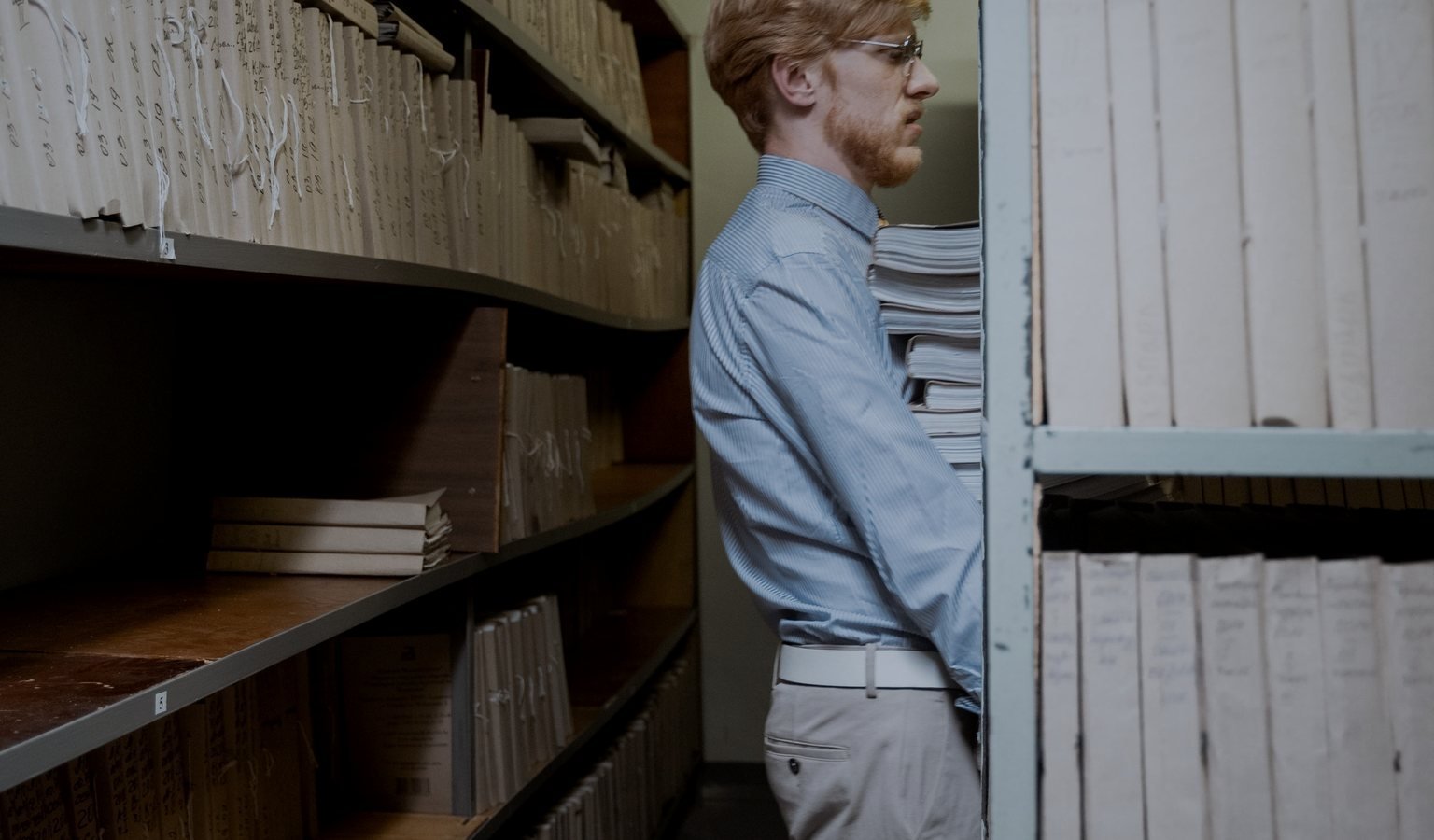
Six hundred rows, four columns, and a tab called Coverage. It was produced for a gate review, signed off, and never opened again — except by the one person who had to prove it existed.
Meanwhile, a change arrived: a regulatory tweak to how a fee is disclosed. Nobody could say, in under a day, which screens, reports and interfaces would be affected. The matrix had the answer and the matrix was useless, because it was organised by requirement rather than by the thing that changes.
Build it backwards
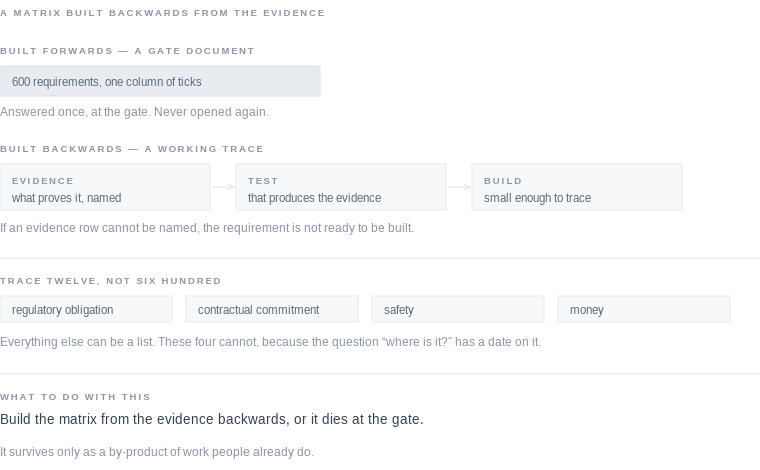
A matrix that starts from requirements answers “is this requirement covered?” once, at a gate. A matrix that starts from artefacts — screens, endpoints, reports, jobs, tables — answers “what breaks if I touch this?” every week.
The reverse index is the useful half. Requirement to artefact is a compliance exercise; artefact to requirement is an engineering tool. Both come from the same data, and only one of them gets used.
Trace the twelve that matter
Not everything needs tracing. Regulatory obligations, contractual commitments, safety and money — those need an unbroken line from the clause to the test that proves it. The rest needs a link that is good enough to survive a change request.
Twelve to twenty traced requirements is a working list. Six hundred is an archive, and an archive is trusted by nobody, because everyone knows it was not maintained after the gate.
What keeps it alive
The matrix has to be a by-product of work people already do. If updating it is a separate task, it dies within a release. Link the artefact identifier in the ticket, generate the matrix from those links, and the matrix becomes a report rather than a deliverable.
The test is a question asked in a normal week: someone proposes a change to one endpoint, and within an hour the team can name the requirements it serves, the tests that cover it, and the two other systems that will notice. If that takes a meeting, the matrix is decoration.

Working through this now?