Insight · kiosk
A kiosk that adds a queue is still a queue
Self-service does not remove the wait. It moves it, and the moving is the part that has to be designed.
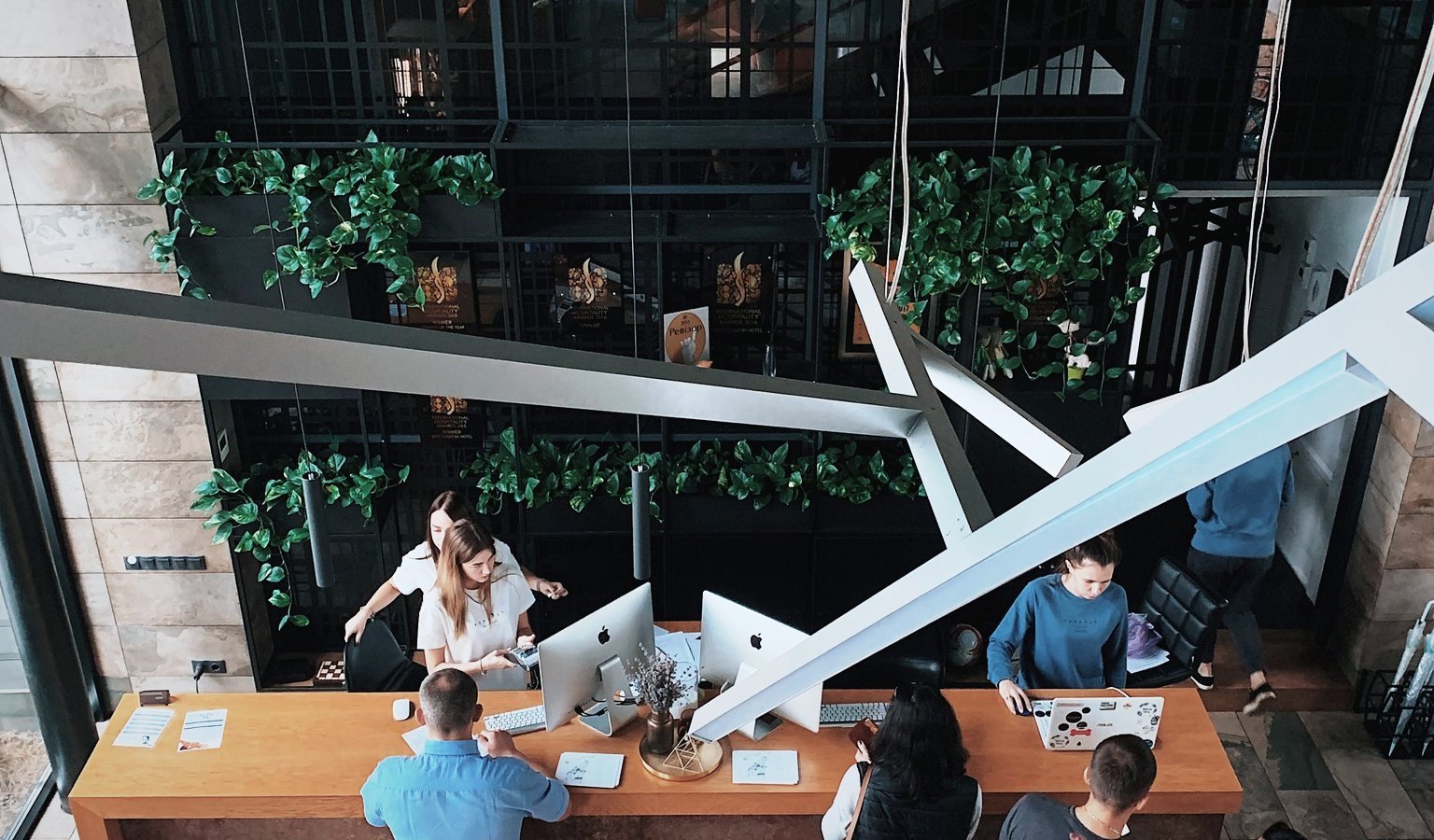
Three kiosks in a hotel lobby, all powered, all logged in, none in use. Behind them, a check-in desk with a queue. The kiosks were installed to shorten that queue and had been open for five months.
Nobody had measured whether they did. The project closed on a delivery date, not on a change in the flow, so the only number anyone could quote was the number of units shipped.
The wait did not disappear, it relocated
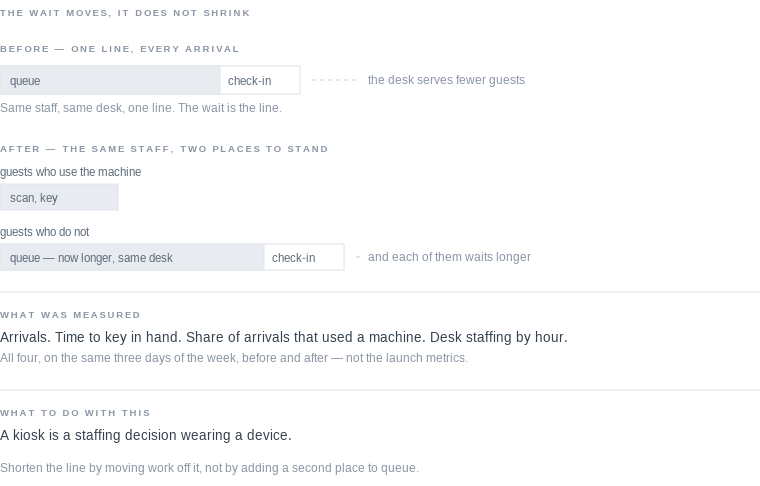
Self-service splits one queue into two: the people willing to use a machine, and the people who now queue behind the ones who tried the machine and gave up. If the second group is larger than the first, the average wait goes up while the project reports success.
The arithmetic is unforgiving. A kiosk that takes ninety seconds longer than a trained agent has to be more than twice as attractive to be worth installing. Most are not, because most are designed around what the system can do rather than what a tired guest can do at eleven at night with a suitcase and a phone in one hand.
What to measure before and after
Four numbers, taken on the same three days of the week, before and after:
- Arrival to key in hand. Not check-in to key. The clock starts when the guest joins a line, not when a screen wakes up.
- Abandonment. People who started an interaction and left it. The kiosk will not tell you this; an observer with a clipboard will.
- Assisted rate. How often a staff member has to walk over. If it is above one in five, the interface is not finished.
- Second visit behaviour. Whether the guest who used the kiosk once uses it again. This is the only number that predicts the queue.
Design the flow, not the device
A kiosk works when it is placed where the decision happens — at the end of the line, not in a corner — when it does three things and says so on the first screen, and when there is a human within ten metres who is not behind glass.
Everything else is a detail of the hardware. The hardware is the easy part, which is why it is the part that gets bought first.
The test at the end is simple and rarely run: stand in the lobby at the busiest hour and count how many people touch the screen in twenty minutes. If the answer is two, the queue did not move. It just got a witness.

Working through this now?